Metal roofs provide certain advantages over other roofing materials. They’re highly durable, require minimal maintenance and can help your home become more energy-efficient. However, there are several myths about metal roofs that have been around for awhile. Learn the truth behind each myth if you’re considering getting this kind of roof for your home.
Metal Roofs Attract Lightning Strikes
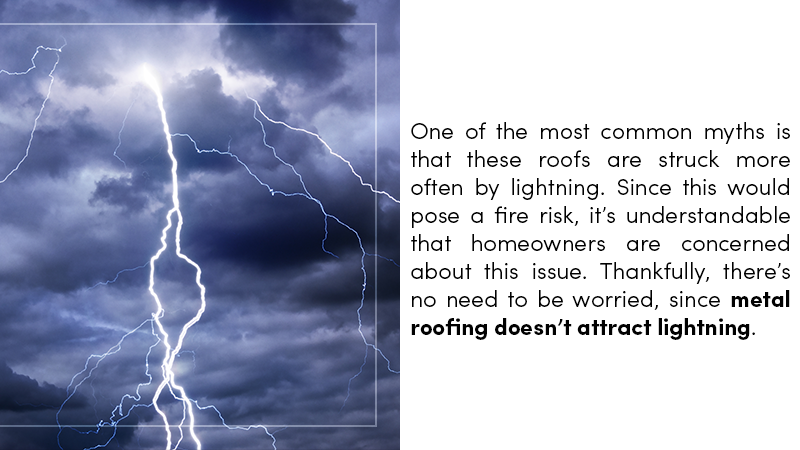
One of the most common myths is that these roofs are struck more often by lightning. Since this would pose a fire risk, it’s understandable that homeowners are concerned about this issue. Thankfully, there’s no need to be worried, since metal roofing doesn’t attract lightning. In fact, metal roofs can help lessen the impact of lightning if it does strike your home. They’re also fire-resistant, so you don’t have to be concerned about your home going up in flames.
Metal Roofs are More Vulnerable to Hail Damage
It might seem as though metal roofs would be more likely to become dented when there’s a hail storm. However, these roofs are durable enough to hold up to most of these storms. You might end up with a bit of damage with unusually large hail, but average hail shouldn’t make any dents in a metal roof. Keep in mind that even if you do have hail damage, this is usually something that metal roof manufacturers cover under their warranty.
Metal Roofs Lead to Colder Homes in Winter
Having a metal roof on your home might make you think that you can expect a colder interior during the winter months. Fortunately, this isn’t true. No matter how cold it gets outside, a metal roof doesn’t affect the temperature inside your home. The amount of insulation you have in your attic is what determines how warm or cool your home feels in winter. During summer, having one of these roofs can actually be beneficial for your home. Metal roofs reflect the sun’s rays, leading to cooler indoor temperatures and less energy usage.
Metal Roofs are Noisy When it Rains
If you’re worried about how loud rain will sound when it hits a metal roof, rest assured that it’s not any louder than usual. This type of roof is more than just sheets of metal placed on your home. There are other materials and components that go along with it, such as insulation, which dulls the sound of rain. When you have a metal roof, rain won’t sound any louder than it does when it hits shingled roofs.
Need more information about metal roofs? Please contact us at L&L Contractors today to set up a meeting with one of our contractors.